⚡ Year End Special Deals on Xeno Digital Locks | Limited Stocks – Shop Now! | 🔒 Save $50 on Xeno X Gate Lock – Code X50 |
🚪 Save $15 on Door Bottom Seal – Code SEAL15 |
🛡️ Save $50 on Alexi Pro Lock – Code PRO50| FREE Installation + Delivery Included in Every Xeno Year End Super Deal |
⚡ JULY LAUNDRY DEALS LIVE — Save $50 on Essential– Code XENO50 | Save $100 on Platinum– Code XENO100

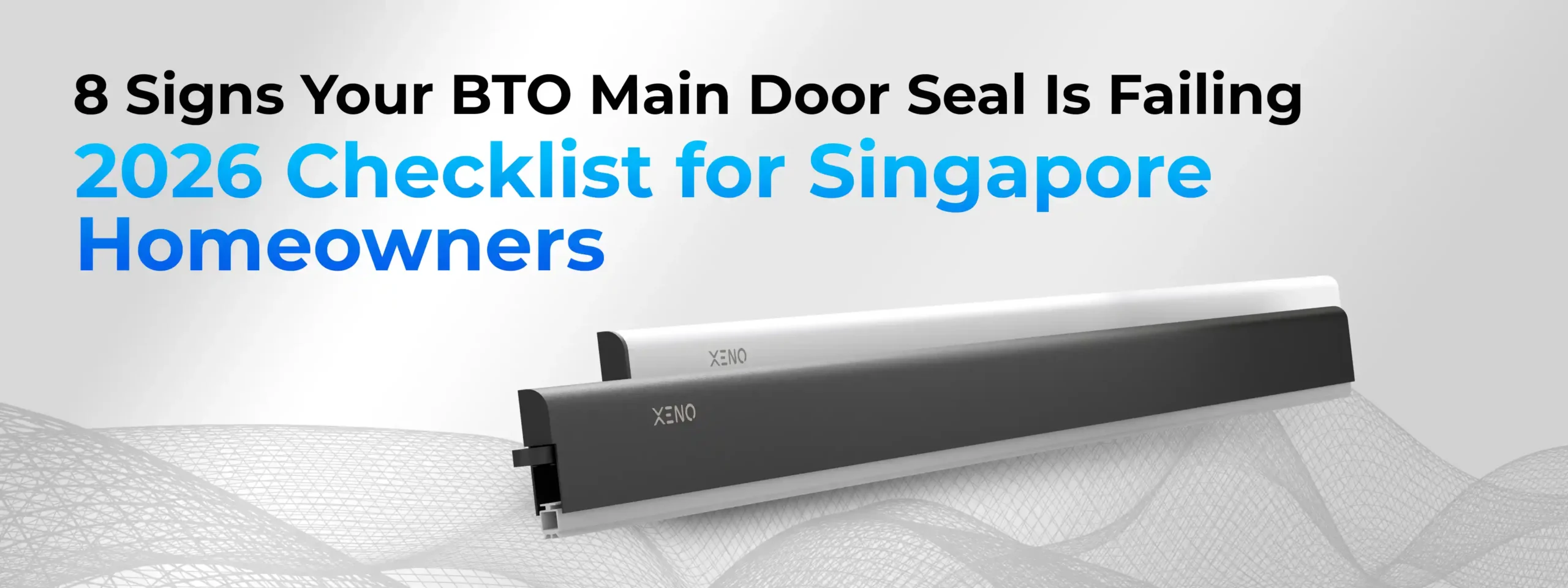
8 Signs Your BTO Main Door Seal Is Failing — 2026 Checklist for Singapore Homeowners

You spent years on the BTO ballot, months planning your renovation, and real money getting every detail right. But there’s one small part of your home that most people overlook completely — until things start going wrong.
The door seal at the bottom of your main door.
If it’s worn, damaged, or simply past its lifespan, you could be breathing in corridor dust every single day, watching insects crawl under the gap at night, losing cold air and paying for it on your electricity bill, and tolerating more noise than you should. BTO main doors typically come with a basic factory-fitted seal. Over 1–3 years of daily use, Singapore’s heat and humidity take a real toll. Most homeowners don’t realise the seal has degraded until the symptoms are impossible to ignore — by which point they’ve already been paying the price for months.
This checklist helps you spot the warning signs early.
What Does a Door Seal Actually Do?
A door bottom seal (also called a door threshold seal or drop seal) sits along the bottom edge of your door. When the door closes, it contacts the floor and eliminates the gap between the door and the ground — blocking everything in the corridor from entering your home.
A properly functioning seal:
- Blocks dust and fine particles from the corridor
- Prevents insects — including cockroaches — from crawling through
- Reduces noise from corridors, lifts, and neighbours
- Stops cold air escaping from air-conditioned rooms
- Blocks light gaps and corridor smells
- Lowers aircon workload, reducing electricity costs
When the seal wears out, all of these protections break down — often so gradually that homeowners don’t notice until the damage is done.
The 8 Warning Signs — Your 2026 Checklist
Work through this list honestly. Two or more signs means your BTO door seal is likely due for replacement.
Sign 1: Visible Dust Accumulation Near Your Main Door
What to look for: A consistent layer of fine dust just inside your front door, even shortly after mopping.
HDB corridors are heavily trafficked, and dust, sand particles, and outdoor pollutants are always present. A good seal keeps most of this out. If you’re consistently seeing a grey or brown dust band along the bottom edge of your door, your seal has stopped making proper floor contact. Fine dust also aggravates allergies and respiratory issues — a concern for households with young children or elderly members.
Sign 2: Insects Entering Under the Door
What to look for: Cockroaches, ants, or small insects near your front door — particularly at night or after rain.
A gap of just 5–8mm under your door is enough for most common household insects to enter. If pests are appearing near the entrance despite a clean home, the bottom gap is the most likely culprit — especially in lower-floor units or those near bin areas.
Quick test: At night, turn off all interior lights and look at the bottom of your closed door. A visible strip of corridor light means the gap is wide enough for insects to pass through freely.
Sign 3: Corridor Noise Is Getting Louder
What to look for: More corridor sounds — lift motors, neighbours, delivery riders — than you remember from when the flat was newer.
A door seal doesn’t fully soundproof a room, but it meaningfully reduces the ambient noise travelling through the bottom gap. If corridor sounds feel more intrusive than they used to, seal degradation is likely a factor. This sign is gradual — many homeowners adapt without realising the noise level has crept up over months.
Sign 4: Your Air-Conditioning Feels Less Effective
What to look for: Your room takes longer to cool, or your aircon runs longer to hold the same temperature.
This is the sign that hits your wallet directly. Most Singapore households run aircon four to eight hours daily. Cold air leaking through a door gap forces the unit to work harder — and that shows up on your electricity bill. A worn main door seal is one of the most common but least diagnosed causes of rising electricity costs in HDB homes. If your bill has crept up $20–$40 monthly with no obvious cause and your aircon is otherwise fine, check your door seal before booking a servicing.
Sign 5: You Can See Light Under the Door
What to look for: A visible strip of light along the bottom of your fully closed main door.
This is the fastest and most reliable test — it takes five seconds. Close the door during daylight or when corridor lights are on. A continuous line of light means the seal is absent, compressed flat, or no longer dropping to make floor contact. If light is getting through, so is everything else: dust, insects, noise, and your air-conditioned air.
Sign 6: You Feel a Draught Near the Door
What to look for: A faint but distinct movement of air across the floor near your closed main door.
Singapore isn’t cold, but corridor wind pressure — especially in high-rise HDB blocks above level 10 or in corner units — can be persistent. If you feel air moving near the base of the door when it’s closed, or notice your aircon cycling on more often when standing near the entrance, wind is infiltrating through the gap.
Sign 7: The Seal Strip Is Visibly Damaged or Flattened
What to look for: The rubber or silicone strip at the bottom of your door is cracked, compressed flat, torn, or peeling away.
Most BTOs are fitted with a basic fixed rubber strip. Because it drags along the floor on every open and close, daily friction wears it down fast — and Singapore’s heat accelerates hardening and cracking. Even if it looks intact, run your finger firmly along its full length. If it feels hard, brittle, or no longer bounces back when pressed, it is no longer sealing effectively.
Sign 8: Corridor Smells Entering Your Home
What to look for: Cooking smells, cigarette smoke, or corridor odours that consistently enter your flat with the door closed.
This one surprise homeowners, but it’s the same gap at work. Airborne odour molecules travel with air currents. The cold air inside your flat creates a pressure differential that actively draws corridor air inward — smells included. If you consistently catch your neighbour’s dinner cooking despite a closed door, the bottom gap is almost certainly how it’s getting in.
How Long Does a BTO Door Seal Last in Singapore?
Basic rubber strip seals (standard BTO factory fit): 1–3 years. Continuous floor friction in Singapore’s humidity and heat wears them down quickly.
Automatic drop seals: 5–7 years. The mechanism retracts fully when the door opens, so the seal only contacts the floor when closed — almost eliminating friction-based wear.
If your BTO is more than 2 years old and still has the original rubber strip, inspect it now. Wear is often well advanced before the obvious symptoms appear.
What Should You Replace It With?
For a lasting fix, an automatic door bottom seal is the clear upgrade over a basic rubber strip.
The Xeno Auto Door Bottom Seal is built for Singapore HDB and BTO main doors. Its concealed spring mechanism is invisible when the door is open. The moment the door closes, it drops automatically to create a tight seal against dust, insects, noise, cold air loss, and light gaps — with no floor drag marks.
- Automatic drop-and-retract mechanism
- Compatible with most HDB/BTO wooden main doors (3×7 feet and 4×7 feet)
- Available in silver and black
- Free professional installation + 1-year warranty
→ View the Xeno Auto Door Bottom Seal → | Use code SEAL15 for $15 off.
Want to understand the full difference between seal types? Read: Why Automatic Door Bottom Seals Are Trending in SG (2026).
Quick Summary: BTO Door Seal Checklist 2026
| Sign | What It Means |
| Dust near the door | Seal not making full contact with floor |
| Insects entering | Gap wide enough for pests to pass through |
| Louder corridor noise | Sound leaking through the bottom gap |
| AC less effective / higher bills | Cold air escaping under the door |
| Light visible under closed door | Seal absent, flat, or no longer dropping |
| Draught felt near the door | Wind infiltrating through the bottom gap |
| Seal strip visibly damaged | Rubber worn, cracked, or detached |
| Corridor smells inside the home | Air and odour drawn in through the gap |
Score yourself: 1 sign — monitor closely. 2 or more — replacement recommended.
Conclusion
Your BTO door seal is a small component with a big job. It stands between your home and everything in the corridor — dust, insects, noise, heat, and smells — every single day.
Most homeowners only discover it’s failing after weeks of unexplained dust, a rising electricity bill, or one too many uninvited guests crawling under the door at night. Catching it early saves you money and restores the quiet, clean home you worked hard for.
Upgrading to a quality automatic drop seal is one of the most affordable and immediately impactful improvements you can make to an HDB flat and BTO. It installs in under an hour, requires zero maintenance, and can last a decade.
If you recognised any of the 8 signs above, act now — the gap under your door is working against you every day it’s left unsealed.
→ Explore the Xeno Auto Door Bottom Seal → | Use code SEAL15 for $15 off.
For a full comparison of seal types, read: Choosing the Best Door Seal for Singapore’s Climate
Frequently Asked Questions
1. How do I know if my BTO door seal needs replacing?
Look for these signs: visible dust accumulation near the door, insects entering under the door, louder corridor noise than before, reduced aircon effectiveness, or a visible light gap under the closed door. If you notice two or more of these, the seal likely needs replacing.
2. Can a worn door seal increase my electricity bill in Singapore?
Yes. Cold air escapes through the bottom door gap when the seal no longer makes full contact with the floor. This forces your aircon to work harder and run longer, leading to higher electricity usage over time.
3. What is the difference between a rubber strip seal and an automatic door bottom seal?
A rubber strip seal is a fixed piece of rubber attached to the door bottom — it drags along the floor on every open and close, wearing out faster. An automatic door bottom seal uses a spring mechanism: it drops to seal the gap when the door closes, then retracts when the door opens, significantly reducing wear and improving long-term performance.
4. Is a door bottom seal suitable for BTO HDB main doors?
Yes. Most automatic door bottom seals, including the Xeno Auto Door Bottom Seal, are designed to fit standard HDB and BTO wooden main doors (3×7 feet and 4×7 feet). A professional installer will measure and fit the seal precisely before installation.
5. What is the best door seal for BTO apartments in Singapore?
Automatic drop seals are widely recommended for BTO homes due to their longer lifespan, cleaner operation, and better sealing performance. The Xeno Auto Door Bottom Seal is a popular choice among Singapore BTO homeowners for its concealed mechanism, free professional installation, and compatibility with HDB door specifications.
6. Can I install a door bottom seal myself?
While DIY installation is possible for some models, professional installation is strongly recommended, especially for HDB main doors. Incorrect fitting can affect door operation, leave floor scratch marks, or result in an uneven seal that fails to block gaps properly.