⚡ Year End Special Deals on Xeno Digital Locks | Limited Stocks – Shop Now! | 🔒 Save $50 on Xeno X Gate Lock – Code X50 |
🚪 Save $15 on Door Bottom Seal – Code SEAL15 |
🛡️ Save $50 on Alexi Pro Lock – Code PRO50| FREE Installation + Delivery Included in Every Xeno Year End Super Deal |
⚡ JULY LAUNDRY DEALS LIVE — Save $50 on Essential– Code XENO50 | Save $100 on Platinum– Code XENO100

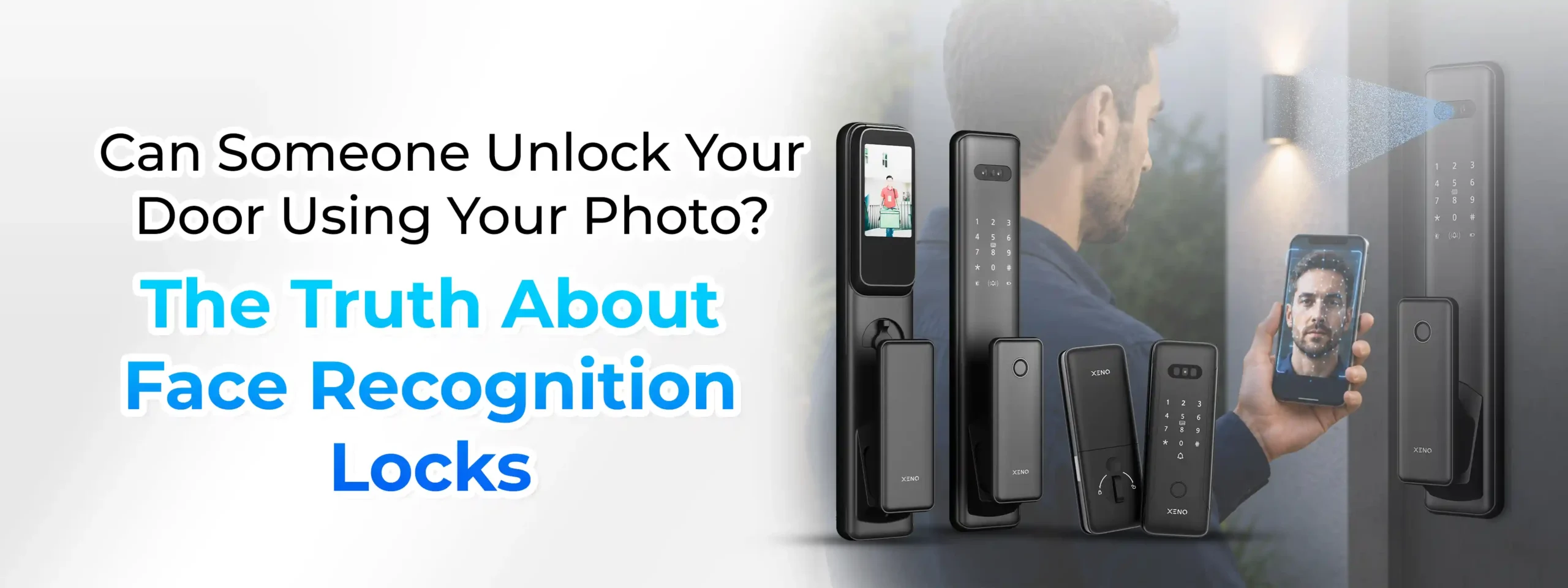
Can Someone Unlock Your Door Using Your Photo? The Truth About Face Recognition Locks

Many homeowners considering facial recognition door locks ask the same question:
Can someone use a photo from Facebook, Instagram, WhatsApp, or CCTV footage to unlock my door?
It’s a reasonable concern.
After all, if a smartphone can recognise your face, could a printed photo or image on a screen fool a face recognition lock too?
The good news is that modern face recognition locks are far more advanced than many people realise. Today’s systems use anti-spoofing technology, infrared sensors, depth detection, and AI-powered facial mapping specifically designed to prevent photo and video attacks.
Before dismissing face recognition technology as risky, it’s important to understand how modern systems actually work.
Quick Answer: Can Someone Unlock Your Door Using a Photo?
No, modern face recognition locks are specifically designed to detect and reject photographs, screenshots, and videos.
Most advanced facial recognition digital locks use liveness detection, infrared sensing, and 3D facial mapping to verify that a real person is standing in front of the lock. While older 2D systems may be vulnerable, modern AI facial recognition locks are built to prevent photo-based spoofing attempts.
Can Someone Unlock a Face Recognition Lock Using a Photo?
The short answer is:
Generally, no.
Modern face recognition lock security systems are built with anti-spoofing measures that analyse much more than a flat image.
Instead of simply matching a photograph, advanced locks evaluate:
- Facial depth
- Skin texture
- Facial contours
- Infrared reflections
- Eye positioning
- Human presence indicators
A printed photo lacks the three-dimensional characteristics required for successful authentication.
This means that holding up a social media picture or smartphone image typically will not unlock a modern facial recognition door lock.
Why Homeowners Worry About Facial Recognition Security
Several concerns commonly arise among Singapore homeowners:
Social Media Photos
Many people share family photos online and worry that strangers could misuse them.
CCTV Footage
Some homeowners fear recorded video footage could be used for unauthorized access.
Public Images
Professional photos, school pictures, and publicly available images often raise concerns about identity theft.
News Reports About Face Recognition Hacking
Stories involving older facial recognition systems sometimes create confusion about how modern smart lock security works.
While these concerns are understandable, most involve outdated technology rather than today’s advanced biometric authentication systems.
How Modern Face Recognition Locks Actually Work
Modern AI facial recognition locks rely on multiple layers of verification.
Infrared Scanning
Infrared sensors capture details that ordinary cameras cannot see.
This allows the lock to analyse facial characteristics regardless of lighting conditions.
3D Facial Mapping
Rather than seeing a flat picture, the system creates a three-dimensional model of the user’s face.
This includes:
- Facial depth
- Distance between features
- Contour structure
- Unique facial geometry
AI Recognition
Artificial intelligence continuously improves recognition accuracy while distinguishing between legitimate users and suspicious attempts.
Depth Sensing
Depth sensors confirm that a real face exists in physical space instead of a photograph displayed on paper or a screen.
Many newer face recognition lock systems use 3D depth mapping specifically to prevent spoofing attacks.
What Is Anti-Spoofing Technology?
Anti-spoofing technology refers to security measures designed to prevent fake identities from bypassing biometric systems.
Photo Attack Prevention
The system identifies flat images and rejects them.
Video Attack Prevention
It can detect when a face is displayed on another screen.
Liveness Detection
Liveness detection verifies that a living person is physically present.
Human Presence Verification
The lock analyses movement, depth, facial characteristics, and environmental signals before granting access.
This technology is one of the main reasons why modern face recognition locks are significantly more secure than earlier generations.
Can Face Recognition Be Fooled by Videos?
Modern systems are specifically designed to detect video-based attacks.
Potential indicators include:
- Lack of depth information
- Screen glare
- Artificial movement patterns
- Infrared inconsistencies
While no security technology is completely invulnerable, advanced facial recognition security systems are far more resistant to video spoofing than older technologies.
2D Face Recognition vs 3D Face Recognition
| Feature | 2D Face Recognition | 3D Face Recognition |
| Uses Flat Images | Yes | No |
| Depth Detection | No | Yes |
| Infrared Scanning | Limited | Yes |
| Anti-Spoofing Capability | Basic | Advanced |
| Photo Attack Resistance | Lower | High |
| Security Level | Moderate | High |
| Home Security Suitability | Limited | Recommended |
Common Face Recognition Myths Homeowners Believe
Myth: Anyone Can Use My Facebook Photo
Fact: Modern systems require depth and liveness verification.
Myth: Videos Can Easily Trick Face Recognition
Fact: Advanced systems detect video playback attempts.
Myth: Face Recognition Is Less Secure Than Fingerprints
Fact: Both technologies offer strong biometric authentication when implemented properly.
Myth: Facial Recognition Doesn’t Work at Night
Fact: Infrared technology enables operation in low-light environments.
Myth: Face Recognition Stores Actual Photos
Fact: Most systems store encrypted biometric templates rather than image files.
How Modern Smart Locks Reduce Security Risks
Modern digital lock security relies on multiple protection layers.
Anti-Spoofing Protection
Prevents fake image attacks.
Multi-Factor Authentication
Users can combine multiple verification methods.
PIN Code Backup
Provides an alternative access method.
Fingerprint Backup
Offers additional biometric authentication.
Mobile App Control
Enables monitoring, notifications, and access management.
Xeno modern Singapore smart locks combine face recognition, palm, fingerprint, PIN, RFID, and app access for layered security.
Why Many Singapore Homeowners Are Switching to Face Recognition Locks
Face recognition technology offers both convenience and security.
Benefits include:
- Hands-free access
- Faster entry
- Reduced dependency on keys
- Enhanced authentication
- Family-friendly operation
- Smart home integration
For HDB, BTO, condo, and landed homeowners, these advantages make facial recognition increasingly attractive as part of a modern smart home ecosystem.
How Xeno Face Recognition Locks Protect Against Photo Attacks
Xeno’s face recognition lock solutions incorporate technologies designed to improve both convenience and security.
Key features include:
- 3D facial recognition
- Fast authentication
- Anti-spoofing protection
- Multiple access methods
- Mobile app integration
- Smart home compatibility
Certain models also integrate advanced biometric technologies such as 3D facial recognition, fingerprint access, and additional authentication options to provide layered security.
FAQ Section
Can someone unlock a face recognition lock with a photo?
Modern face recognition locks are designed to reject photographs through anti-spoofing and liveness detection technology.
Can videos fool facial recognition locks?
Advanced systems use depth sensing and infrared analysis to detect video playback attacks.
What is liveness detection?
Liveness detection verifies that a real person is physically present rather than a photo, mask, or video.
Are face recognition locks safer than fingerprints?
Both technologies are secure. Many homeowners prefer locks that offer both methods.
Is facial recognition safe for HDB homes?
Yes. Modern face recognition locks are widely used in HDB, condo, and landed properties.
What happens if facial recognition fails?
Users can typically unlock using fingerprint, PIN code, RFID card, or mobile app access.
Do face recognition locks store my photo?
Most systems store encrypted biometric templates instead of actual image files.
Can facial recognition work at night?
Yes. Infrared sensors allow recognition in low-light conditions.
Can identical twins fool facial recognition locks?
Advanced systems may include additional authentication methods to reduce such risks.
Is anti-spoofing technology important?
Yes. It is one of the most important security features in modern facial recognition systems.
Key Takeaways
- Modern face recognition locks cannot typically be unlocked using ordinary photos, videos.
- Anti-spoofing technology helps prevent photo and video attacks.
- Liveness detection verifies real human presence.
- 3D facial recognition offers stronger protection than older 2D systems.
- Multi-factor authentication further improves security.
Security Summary
If you’re wondering whether face recognition can be fooled by photos, the answer for modern systems is generally no. Today’s facial recognition digital locks use sophisticated technologies specifically designed to detect and reject spoofing attempts.
Want to learn more about advanced face recognition digital locks suitable for your home? Explore the latest innovations designed to provide both convenience and stronger protection for Singapore homes.